
【本文摘要】
482转186 TRT通道申请人换过雇主,之前的工作经历还算不算数?答案是:算,但有前提条件。2024年12月的政策调整取消了”必须在同一雇主处连续工作2年”的要求,允许跨雇主累计计算;2025年11月的补充说明进一步明确了”哪些工作经历有效”的具体判定标准。本文详解这套累计计算规则的具体运作方式,以及换雇主时最容易踩的坑。
作者:Chunqiu Hu | 注册移民代理 | HWC Legal Melbourne
最后更新:2026年7月
换雇主不会让你的进度清零,但每一段工作经历能不能算数,取决于几个具体条件
Subtitle: Changing employers doesn’t reset your progress to zero — but whether each period counts depends on a few specific conditions
📌核心结论:2024年12月起,186 TRT不再要求在同一雇主处连续工作满2年,跨雇主的工作经历可以累计计算,但每一段都必须是在”合规担保状态下”完成的。
Core point: since December 2024, the 186 TRT stream no longer requires continuous employment with a single employer — work across multiple employers can be combined, but each period must have occurred under a compliant sponsorship arrangement.
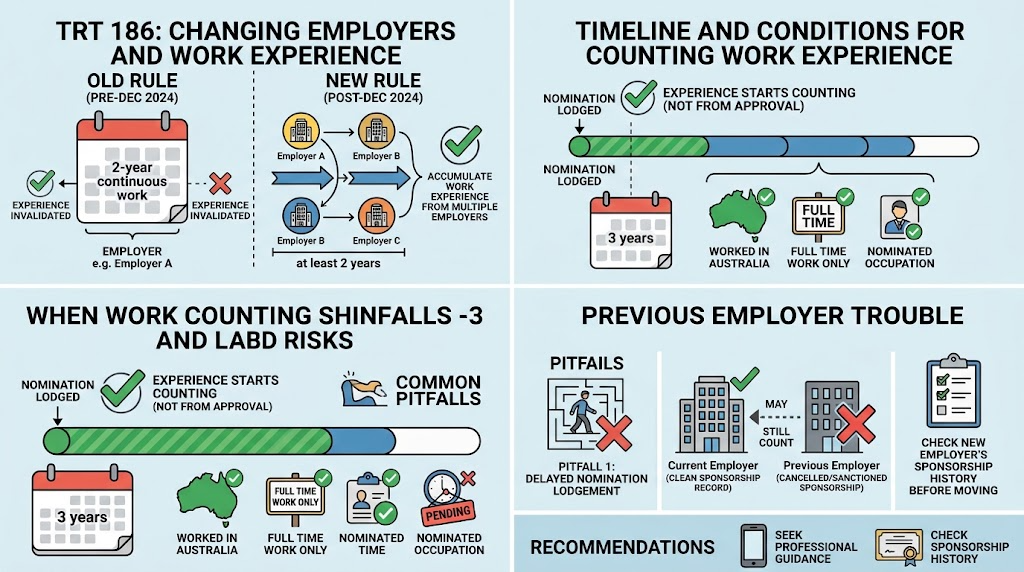
一、旧规则 vs 新规则:核心变化是什么Old rule vs new rule: what actually changed
📜 旧规则(2024年12月7日之前)
📜 The old rule (before 7 December 2024)
此前的规则要求申请人在递交186 TRT申请前的3年内,必须有至少2年是在同一个雇主处工作,如果中途换过雇主,之前雇主的工作年限通常无法计入,申请人相当于要在新雇主处重新攒够2年。
The previous rule required applicants to have worked for the same employer for at least 2 of the 3 years before lodging their 186 TRT application. If they’d changed employers, time with the previous employer generally couldn’t be counted — effectively starting the 2-year clock over with the new employer.
✅ 新规则(2024年12月7日起生效)
✅ The new rule (effective from 7 December 2024)
移民局已正式确认,申请人不再需要在同一雇主处工作满整整2年才能满足TRT的工作经历要求——换过雇主的申请人,可以将不同雇主处的合规工作经历累计相加,凑满”过去3年内至少2年”这个门槛。
The Department has formally confirmed that applicants are no longer required to work for the same employer for the full 2 years to meet the TRT work experience requirement — those who’ve changed employers can combine compliant work periods across different employers to reach the “at least 2 of the past 3 years” threshold.
二、跨雇主累计计算,具体要满足什么条件What conditions must be met for cross-employer counting
⏱️ 换雇主后,新的工作经历从什么时候开始算
⏱️ When does work with a new employer start counting
这是2025-2026年多轮补充说明里被反复强调的一点:换雇主后,新雇主处的工作经历,从新提名递交(lodged)当天就开始计入,不需要等到提名正式获批之后才开始算,也不需要等你正式开始上班——只要提名已经递交,从那天起的合规工作时间就可以计入。
This point has been repeatedly emphasised across 2025-2026 clarifications: work with a new employer starts counting from the day the new nomination is lodged, not from when it’s formally approved — and you don’t need to wait for approval before the clock starts, as long as the nomination has been submitted.
📋 什么样的工作经历”算数”
📋 What kind of work experience actually “counts”
需要同时满足:全职工作(非兼职)、在澳洲境内完成(境外工作不算)、且是在你被批准从事的职业(nominated occupation)范围内——如果做的是跟提名职业无关的工作,即便是全职、即便雇主合规,这段时间同样不能计入。
Several conditions must be met simultaneously: the work must be full-time (not part-time), performed within Australia (overseas work doesn’t count), and within the occupation you were approved to perform (nominated occupation) — even full-time work with a compliant employer won’t count if it falls outside your nominated occupation.
⚠️ 雇主必须处于”合规担保”状态
⚠️ The employer must have been sponsoring you compliantly
这是最容易被误解的一点:规则并不要求你依赖的整段工作经历期间,雇主都必须持续保持”经批准担保人”身份,但雇主必须针对你被计入的这段工作时间,确实合法地担保过你——如果换工作时没有正式走”担保转移提名”(sponsorship transfer nomination),这段”黑户”工作经历同样不能计入。
This is the most commonly misunderstood part: the rule doesn’t require the employer to have held “approved sponsor” status for the entire period you’re relying on — but the employer must have genuinely, lawfully sponsored you for whatever period is being counted. If a sponsorship transfer nomination wasn’t formally lodged when you changed jobs, that “unsponsored” period of work can’t be counted.
三、2025年11月的补充说明:前任雇主出问题了怎么办The November 2025 clarification: what if a previous employer ran into trouble
🚨 前雇主担保资格被取消或处罚
🚨 If a previous employer’s sponsorship was cancelled or sanctioned
2025年11月的政策澄清进一步说明:如果你之前某个雇主的担保资格后来被取消或受到处罚,那段工作经历依然有机会被计入——但前提是,你现在的提名雇主本身必须有良好的担保合规记录(没有被取消、禁止或处罚的历史)。
The November 2025 policy clarification further specifies: if a previous employer’s sponsorship was later cancelled or sanctioned, that period of work can still potentially count — but only if your current nominating employer has a clean sponsorship compliance history (no cancellations, bars, or sanctions).
❌ 如果现任雇主的担保记录不干净
❌ If your current employer’s sponsorship history isn’t clean
反过来,如果你现在的提名雇主自身的担保记录有问题,那么你依赖前雇主那段工作经历的计划,可能就无法成立——这也是为什么建议在确定新雇主之前,先大致了解一下对方的担保历史。
Conversely, if your current nominating employer’s own sponsorship record has issues, relying on that earlier period of work with a previous employer may not be possible — which is why it’s worth getting a general sense of a new employer’s sponsorship history before committing.
四、换雇主时最容易踩的坑The most common pitfalls when changing employers
🚫 坑一:换工作后没有及时走担保转移提名
🚫 Pitfall one: not lodging a sponsorship transfer nomination promptly
不少申请人换工作后,误以为”只要人还在做同样的工作、雇主也愿意继续雇我”,工作经历就自动算数,但如果新雇主没有正式递交提名,这段时间在TRT计算里可能完全不算数,白白浪费了时间。
Many applicants assume that as long as they’re still doing the same kind of work and their employer is willing to keep them on, the time automatically counts — but if the new employer hasn’t formally lodged a nomination, that period may not count toward TRT at all, wasting valuable time.
🚫 坑二:误以为必须等提名批准才能开始算
🚫 Pitfall two: mistakenly waiting for nomination approval before assuming the clock has started
如前所述,新规则下工作经历从提名递交当天就开始算,不少申请人因为不了解这一点,误以为要等到提名获批(这个过程有时需要数月)才开始计算,白白让自己以为进度比实际慢。
As noted above, under the new rules, work experience counts from the day the nomination is lodged — not approved. Many applicants, unaware of this, mistakenly believe they need to wait for approval (which can take months) before the clock starts, and end up thinking their progress is slower than it actually is.
🚫 坑三:换到担保记录有问题的雇主处
🚫 Pitfall three: moving to an employer with a problematic sponsorship record
如果打算依赖之前雇主的工作经历来凑年限,但换到的新雇主担保记录本身不干净,可能导致整个累计计算方案落空,建议在换工作前,评估清楚新雇主的担保资质状况。
If you’re planning to rely on work experience with a previous employer to make up your years, but the new employer’s sponsorship record has issues, the entire accumulation strategy may fall apart — it’s worth assessing a new employer’s sponsorship standing before making the move.
五、我们的建议Our recommendations
✅ 换工作前,先确认新雇主的担保状态
✅ Confirm the new employer’s sponsorship status before switching
在决定换工作前,建议先了解清楚新雇主是否具备担保资格、担保记录是否良好,避免影响你已经积累的工作经历。
Before deciding to switch jobs, it’s worth confirming whether the new employer holds sponsorship approval and has a clean compliance history, to avoid jeopardising work experience you’ve already accumulated.
✅ 换工作后,第一时间推进担保转移提名
✅ Push for the sponsorship transfer nomination promptly after switching
一旦确定换雇主,应尽快让新雇主递交提名,因为工作经历从递交当天就开始计算,拖延递交等于白白损失时间。
Once you’ve decided to change employers, push to have the new employer lodge the nomination as soon as possible — since counting starts from the lodgement date, any delay simply wastes time.
✅ 保留好每一段工作经历的完整记录
✅ Keep complete records of every period of employment
建议自己也保留好每一段工作的起止时间、职位描述、雇主担保状态等记录,方便递交186申请时清晰梳理整个工作经历时间线。
It’s worth keeping your own records of the start/end dates, role descriptions, and sponsorship status for each period of employment — this makes it much easier to clearly lay out your full work history when lodging the 186 application.
❓常见问题 FAQ
Q1:换过雇主,之前的工作经历还能算进186 TRT的2年要求吗?
If I’ve changed employers, can my previous work still count toward the 186 TRT’s 2-year requirement?
A:可以。2024年12月起,规则已经取消了”必须在同一雇主处工作满2年”的要求,允许跨雇主累计计算,但每段工作都必须是在合规担保状态下完成的。
Yes. Since December 2024, the requirement to work for the same employer for the full 2 years has been removed — cross-employer periods can be combined, but each period must have occurred under compliant sponsorship.
Q2:换雇主后,新的工作经历从什么时候开始算?
When does work experience with a new employer start counting?
A:从新雇主递交提名的当天开始算,不需要等提名正式获批。
From the day the new employer lodges the nomination — you don’t need to wait for the nomination to be approved.
Q3:如果之前雇主的担保资格被取消了,那段工作经历还算数吗?
If a previous employer’s sponsorship was cancelled, does that period of work still count?
A:有可能算数,但前提是你现在的提名雇主本身有良好的担保合规记录;如果现任雇主的担保记录也有问题,这段经历可能无法计入。
It may still count, but only if your current nominating employer has a clean sponsorship compliance record. If the current employer’s own record has issues, that earlier period may not count.
Q4:换工作后忘记走担保转移提名,会有什么后果?
What happens if I forget to lodge a sponsorship transfer nomination after changing jobs?
A:这段”未正式担保”的工作时间很可能无法计入186 TRT的工作经历要求,建议换工作后第一时间推进提名递交。
That “unsponsored” period is likely to be excluded from the 186 TRT work experience requirement — it’s worth pushing to have the nomination lodged as soon as possible after switching jobs.
Q5:兼职工作或者境外工作可以算进2年要求吗?
Can part-time or overseas work count toward the 2-year requirement?
A:不可以。工作经历必须是全职、在澳洲境内完成,且属于被批准的提名职业范围内。
No. The work must be full-time, performed within Australia, and within the approved nominated occupation.
如果你持有482签证、正在考虑换雇主或已经换过雇主,想确认自己的工作经历是否符合186 TRT要求,欢迎联系HWC Legal做详细评估。
If you hold a 482 visa and are considering changing employers (or already have), and want to confirm whether your work experience meets the 186 TRT requirements, contact HWC Legal for a detailed assessment.
📞 0402 672 808
📧 info@hwclegal.com
💬 WeChat: service_au1
🌐 hwclegal.com
参考资料:Department of Home Affairs公开政策指引与2025年11月政策澄清说明
Reference: Department of Home Affairs published policy guidance and November 2025 policy clarification
