作者:Chunqiu Hu | 注册移民代理 | HWC Legal Melbourne 最后更新:2026年7月
新规让境内864理论上能排到境外143前面,但转签的代价可能是放弃你已经攒了多年的排队位置 Subtitle: MD117 theoretically lets onshore 864 jump ahead of offshore 143 — but switching may cost you years of accumulated queue position
📌核心提醒:143和864共用同一个6,800个名额的供款类配额池,但一个是境外类别、一个是境内类别,MD117新规恰恰是按”境内境外”划分优先级,这个结构性差异现在变得空前重要。 Core point: 143 and 864 share the same 6,800-place contributory pool, but one is offshore and one is onshore — and MD117’s new priority split runs exactly along that line, making this structural difference matter more than ever.
一、先复习一下:143和864到底有什么不同First, a recap: what actually differs between 143 and 864
📍 境外 vs 境内 📍 Offshore vs onshore
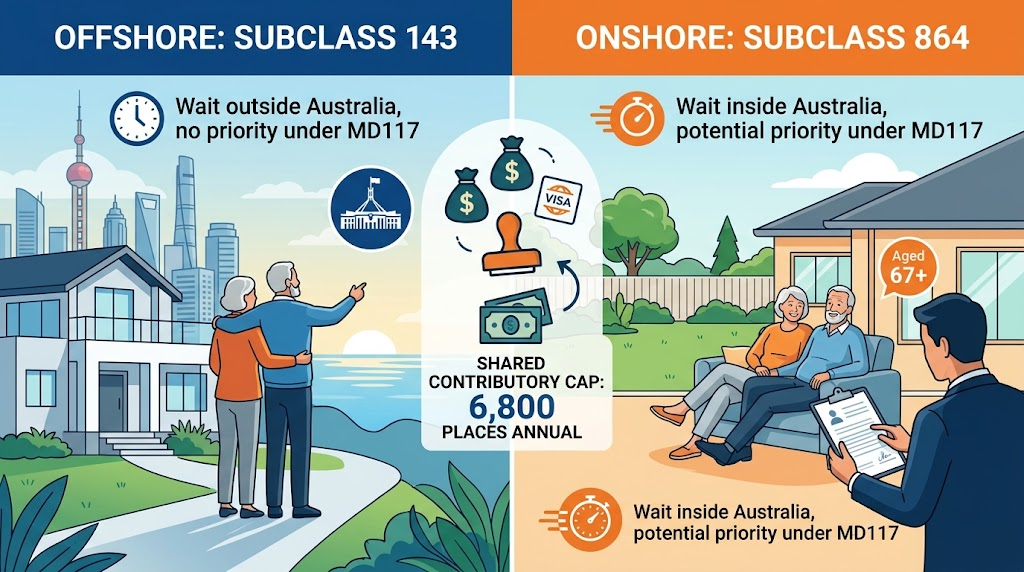
143(供款类父母签证)要求父母在递交申请和最终获批时都必须身处澳洲境外;864(供款类年长父母签证)则要求父母在递交申请时已经在澳洲境内,并且在审理期间通常需要持续留在境内,中途离境可能影响申请。 143 (Contributory Parent) requires the parent to be outside Australia both at application and at grant. 864 (Contributory Aged Parent) requires the parent to already be in Australia at application, and generally to remain in Australia throughout processing — departing partway through can jeopardise the application.
🎂 年龄门槛 🎂 The age threshold
864专门适用于已经达到领取养老金年龄(目前是67岁)的父母;如果父母还没到这个年龄,只能申请143,没有864这个选项。 864 specifically applies to parents who have already reached Age Pension age (currently 67); if a parent hasn’t reached that age, 864 isn’t an option — only 143 is available.
💰 费用和配额 💰 Fees and the shared cap
143和864在费用结构上基本相当(供款类第二笔费用目前约为AUD 48,000/人),并且共用同一个6,800个名额的年度配额池,也就是说,两者本质上是”同一个队伍”里的两条不同准入路径。 143 and 864 carry broadly comparable fees (the contributory second instalment currently sits around AUD 48,000 per applicant), and both draw from the same annual 6,800-place cap — meaning they’re effectively two different entry paths into the same underlying queue.
二、MD117改变了什么What MD117 actually changed
🥇 境内优先,不分子类 🥇 Onshore priority, regardless of subclass
我们在上一篇MD117解读中详细讲过,新规最核心的变化,是新增了”境内可获批申请优先于境外申请”这一层,且这个优先级判断不看具体是哪个签证子类。 As we covered in our previous MD117 explainer, the core change is a new priority tier: onshore-grantable applications are processed ahead of offshore ones — and this doesn’t depend on the specific visa subclass.
🎯 对143和864意味着什么 🎯 What this means specifically for 143 and 864
由于864是境内类别、143是境外类别,理论上,一份864申请现在会被排在境内优先组,处理顺序整体上会比境外的143申请更靠前——即便864本身在”供款类父母”这个细分类别里的原始优先级和143是同一档。 Because 864 is onshore and 143 is offshore, an 864 application would in principle now fall into the onshore-priority group, processed ahead of offshore 143 applications overall — even though within the “contributory parent” sub-tier, 864 and 143 originally sat at the same priority level.
三、但这里有个关键的现实问题:转签会不会丢掉排队年限But here’s the critical practical issue: does switching reset your queue position
📅 排队日期是怎么定的 📅 How your queue date is actually set
供款类父母签证的排队日期,通常是在移民局完成初步审核、确认申请符合核心条件后被指定的,2018年6月1日前递交的申请,排队日期就是当时的递交日期。 The queue date for contributory parent visas is generally assigned once the Department completes an initial assessment confirming the application meets the core criteria — for applications lodged before 1 June 2018, the queue date is simply the original lodgement date.
⚠️ 143转864,很可能等于重新排队 ⚠️ Switching from 143 to 864 likely means starting over
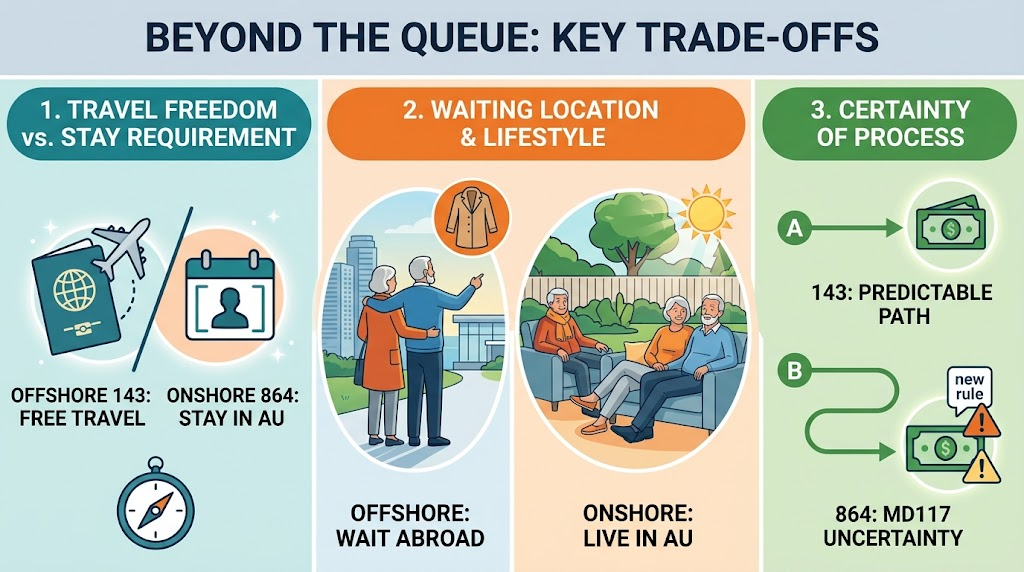
143和864虽然共用同一个配额池,但从签证子类本身来说,864有自己独立的申请要求(境内、年龄门槛),如果你目前持有的是143申请,想要转为864,通常需要撤回或放弃原有的143申请、重新递交一份新的864申请——这意味着你很可能会拿到一个全新的排队日期,而不是延续143已经积累的排队年限。 Although 143 and 864 share the same cap, 864 has its own distinct application requirements as a subclass (onshore, age threshold). If you currently hold a 143 application and want to move to 864, this typically requires withdrawing the existing 143 application and lodging a fresh 864 application — which likely means receiving an entirely new queue date, rather than carrying over the years already accumulated under 143.
💔 这对已经排队多年的家庭是个艰难的取舍 💔 A difficult trade-off for families who’ve already waited years
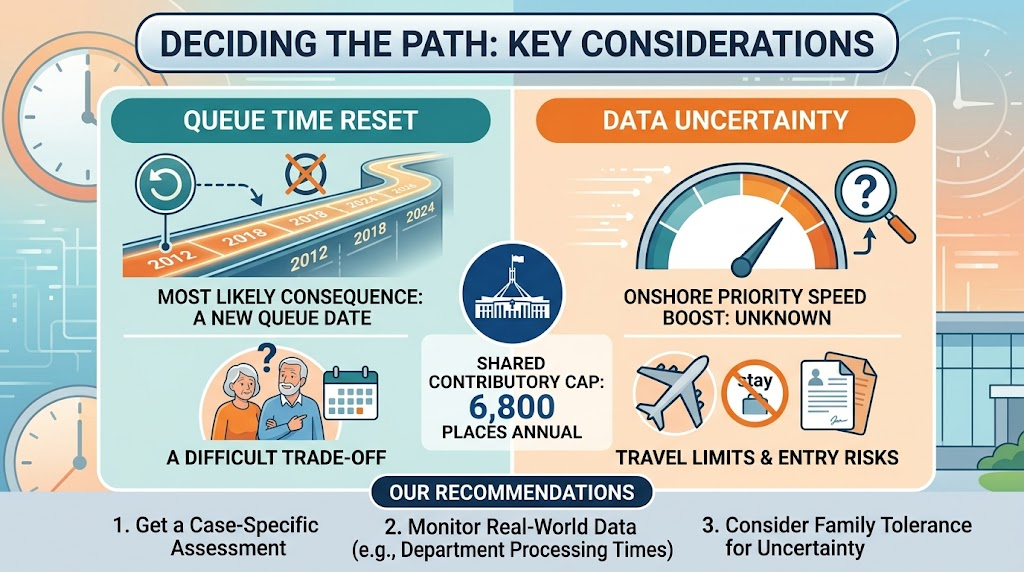
如果你的143已经排队十几年,理论上转864能借助MD117的”境内优先”规则获得更快的处理顺序,但代价可能是直接放弃这十几年积累的排队位置,重新从一个新的排队日期开始——这笔账到底划不划算,取决于具体还剩多少年、以及境内优先能带来多大的实际提速。 If your 143 has already been in the queue for over a decade, switching to 864 could theoretically gain a faster processing position under MD117’s onshore priority rule — but the cost may be giving up that entire decade of accumulated queue position, restarting from a brand-new queue date. Whether this trade-off is worthwhile depends on how many years remain and how much of a genuine speed-up onshore priority actually delivers.
四、除了排队位置,还有哪些现实因素要考虑Beyond queue position, other practical factors to weigh
✈️ 境内864限制了父母的出行自由 ✈️ 864 restricts the parent’s ability to travel
864要求父母在申请期间基本留在澳洲境内,中途离境可能影响申请进度甚至资格,如果父母在国内还有需要经常往返处理的事务(比如自己的父母需要照顾、房产或生意需要打理),这是一个不能忽视的现实成本。 864 generally requires the parent to remain in Australia while the application is pending, and departing partway through can affect progress or even eligibility. If the parent has ongoing matters back home requiring regular travel — caring for their own elderly parents, managing property or a business — this is a real cost that shouldn’t be overlooked.
🛂 父母需要先以合法身份入境并维持身份 🛂 The parent needs to lawfully enter and maintain status in the meantime
申请864的前提是父母本身已经合法在澳洲境内,如果父母目前不在澳洲,需要先以其他签证(比如访客签证)入境,并在864获批前维持合法身份,这中间涉及额外的规划和风险。 Applying for 864 requires the parent to already be lawfully in Australia. If the parent isn’t currently in Australia, they’d first need to enter on another visa (such as a visitor visa) and maintain lawful status until the 864 is granted — which involves additional planning and risk.
📊 “境内优先”具体能提速多少,目前还没有明确数据 📊 How much faster onshore priority actually is remains unclear
MD117才刚生效不久,境内优先具体能带来多大幅度的处理提速,目前公开数据还不足以给出精确判断,这也是决定是否转签时最大的不确定性来源。 MD117 has only recently taken effect, and there isn’t yet enough published data to precisely quantify how much faster onshore priority actually makes processing — this is the single biggest source of uncertainty when deciding whether to switch.
五、我们的建议 五、Our recommendations
✅ 不要仓促决定,先做具体的个案测算 ✅ Don’t decide hastily — get a case-specific assessment first
是否值得转签,取决于你143已经积累的排队年限、父母目前的实际情况(是否已在境内、是否方便长期留澳)、以及家庭对不确定性的承受能力,这些都需要结合具体情况逐一测算,不存在适用于所有人的统一答案。 Whether switching is worthwhile depends on how many years your 143 has already accrued, the parent’s actual circumstances (already onshore or not, whether staying long-term is feasible), and the family’s tolerance for uncertainty — these all need to be assessed case by case; there’s no one-size-fits-all answer.
✅ 密切关注MD117实施后的实际数据 ✅ Keep a close eye on real-world data as MD117 plays out
建议持续关注移民局后续公布的处理数据,一旦能看到境内864和境外143在处理速度上的实际差距,会让这个决策的判断依据更扎实。 It’s worth watching the Department’s published processing data as it emerges — once the actual gap in processing speed between onshore 864 and offshore 143 becomes visible, the decision can be made on much firmer ground.
❓常见问题 FAQ
Q1:143和864是不是同一个队伍? Are 143 and 864 in the same queue? A:两者共用同一个6,800个名额的供款类年度配额池,但作为签证子类各自有独立的申请要求(境外/境内、年龄门槛)。 They share the same annual 6,800-place contributory cap, but as distinct visa subclasses each has its own application requirements (offshore/onshore, age threshold).
Q2:从143转864,会不会保留已有的排队年限? If I switch from 143 to 864, do I keep my existing queue position? A:大概率不会。转864通常需要撤回原有143申请、重新递交新申请,很可能会获得一个全新的排队日期,而不是延续143已经积累的年限。 Most likely not. Switching to 864 typically requires withdrawing the existing 143 application and lodging a new one, which likely results in an entirely new queue date rather than carrying over the years accumulated under 143.
Q3:MD117让864一定比143快吗? Does MD117 guarantee 864 is faster than 143? A:不能保证。MD117确实让境内申请获得优先处理,但具体能提速多少目前还没有足够的公开数据支持精确判断。 Not guaranteed. MD117 does prioritise onshore applications, but there isn’t yet enough published data to precisely quantify the actual speed advantage.
Q4:864申请期间父母可以回国吗? Can the parent travel home while the 864 application is pending? A:通常需要谨慎,864要求父母在审理期间基本留在澳洲境内,中途离境可能影响申请进度甚至资格。 Generally not advisable — 864 requires the parent to remain in Australia while the application is pending, and departing partway through can affect processing or eligibility.
Q5:父母现在不在澳洲,还能申请864吗? Can I apply for 864 if the parent isn’t currently in Australia? A:不能直接申请,父母需要先以其他签证(如访客签证)合法入境,并在864获批前持续维持合法身份。 Not directly — the parent would first need to lawfully enter Australia on another visa (such as a visitor visa) and maintain lawful status until the 864 is granted.
如果你的父母目前持143在排队,且已经达到864的年龄门槛,想评估转签是否划算,欢迎联系HWC Legal做详细的个案测算。 If your parent currently has a 143 application in the queue and has reached the age threshold for 864, and you want to assess whether switching makes sense, contact HWC Legal for a detailed case-specific assessment.
参考资料:Department of Home Affairs公开政策指引;Ministerial Direction No. 117;供款类父母签证公开配额与排队数据 Reference: Department of Home Affairs published policy guidance; Ministerial Direction No. 117; published contributory parent visa cap and queue data