作者:Chunqiu Hu | 注册移民代理 | HWC Legal Melbourne 最后更新:2026年9月
同样的29.5万配额,不同类型院校的实际使用情况天差地别,这个信息很多人还不知道 Subtitle: The same 295,000 national cap is being used very differently across institution types — and most people don’t yet know this
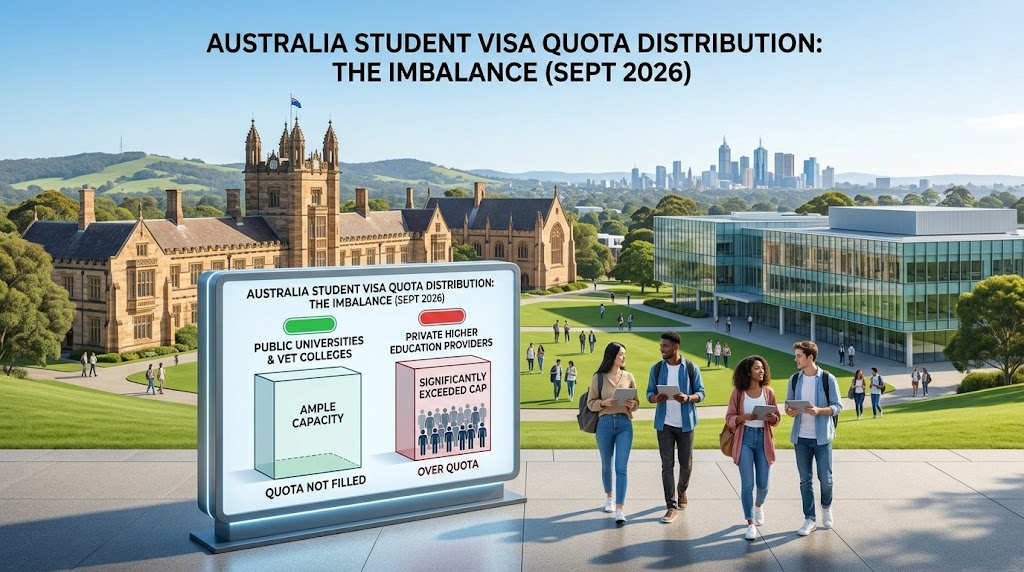
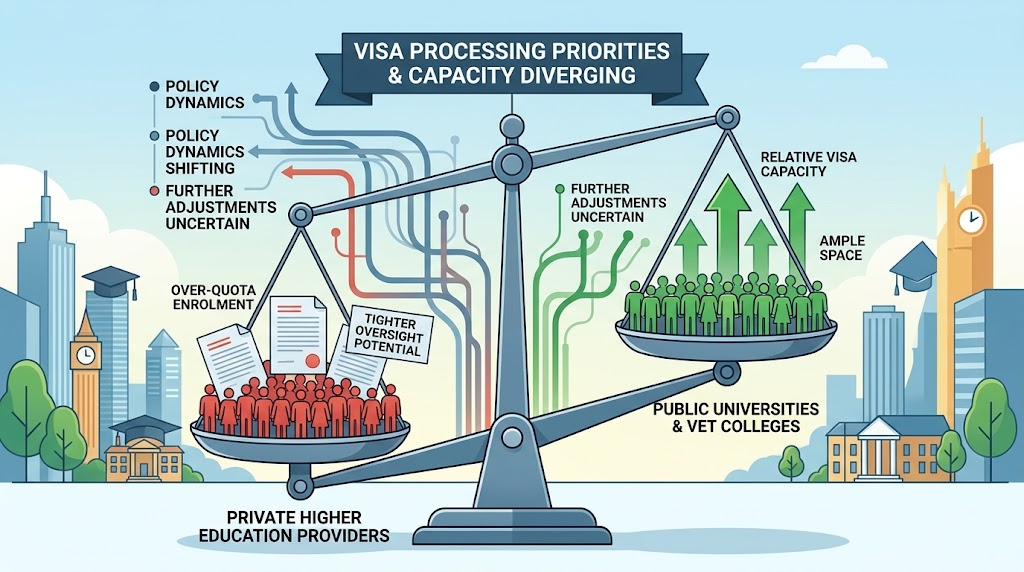
📌核心提醒:截至2026年9月,私立高等教育机构招生已大幅超出配额限制,而职业教育学院和公立大学的招生名额还远远没有用完,这意味着不同类型院校的签证审批优先级和容量正在明显分化。 Core point: as of September 2026, private higher education providers have significantly exceeded their enrolment cap, while VET colleges and public universities remain well under-subscribed — meaning visa processing priority and capacity are diverging sharply across institution types.
一、我们之前讲过的国家配额,最新进展如何An update on the national cap we covered previously
📖 回顾一下背景 📖 A quick recap
我们此前详细讲过,2026年澳洲为国际学生设定了29.5万个的全国性配额上限,并且按院校类型和质量分级分配,而不是简单平均分配。 As we’ve covered before, Australia set a national cap of 295,000 international student places for 2026, allocated by institution type and quality — not distributed evenly.
📊 最新的实际使用数据 📊 The latest actual usage figures
根据曾任移民部副秘书长的Abul Rizvi公开指出的最新情况:截至2026年9月,私立高等教育机构的招生人数已经大幅超出了配额限制,而职业教育与培训学院、以及公立大学的招生人数则远远没有达到配额上限。 According to Abul Rizvi, a former Deputy Secretary of the immigration department, as of September 2026, enrolment numbers at private higher education providers have significantly exceeded their quota limits, while VET (vocational education and training) providers and public universities remain far below their allocated caps.
二、为什么会出现这种严重不均衡Why this significant imbalance has emerged
⚖️ 配额执行力度不同 ⚖️ Enforcement intensity differs by sector
这个现象说明,配额限制在不同教育领域的实际执行效果并不均衡——私立机构的招生审批和监管机制,跟公立大学、VET学院之间存在明显差异,导致同一套全国性配额规则,在不同类型院校之间产生了截然不同的结果。 This shows that the cap’s enforcement isn’t playing out evenly across sectors — the enrolment approval and oversight mechanisms for private providers differ noticeably from those for public universities and VET colleges, producing very different outcomes from the same national cap.
三、这对你的择校策略意味着什么What this means for your school choice strategy
🎯 公立大学和VET学院,名额相对更充足 🎯 Public universities and VET colleges have relatively more room
如果你目前正在规划2026-27年度的入学申请,公立大学和职业教育类院校目前的名额使用情况相对宽松,理论上在签证审批的整体容量上可能更有余地。 If you’re currently planning your 2026-27 enrolment, public universities and VET-sector institutions currently have relatively more room within their quota — meaning, in principle, more overall capacity within the visa approval system.
⚠️ 但这不意味着私立机构的申请一定更难 ⚠️ But this doesn’t necessarily mean private provider applications are harder
配额超出并不直接等同于”这个学校的签证一定更难批”,具体审批结果依然取决于你个人申请材料的质量、GS Statement的逻辑自洽程度等核心因素,配额只是宏观容量层面的一个参考背景。 A provider exceeding its quota doesn’t automatically mean visa approval there is harder — the actual outcome still depends primarily on your individual application quality and how well your GS Statement holds together logically. The quota is background macro context, not a determining factor for your specific case.
🏫 择校时可以多考虑的一个维度 🏫 An extra factor worth weighing when choosing a school
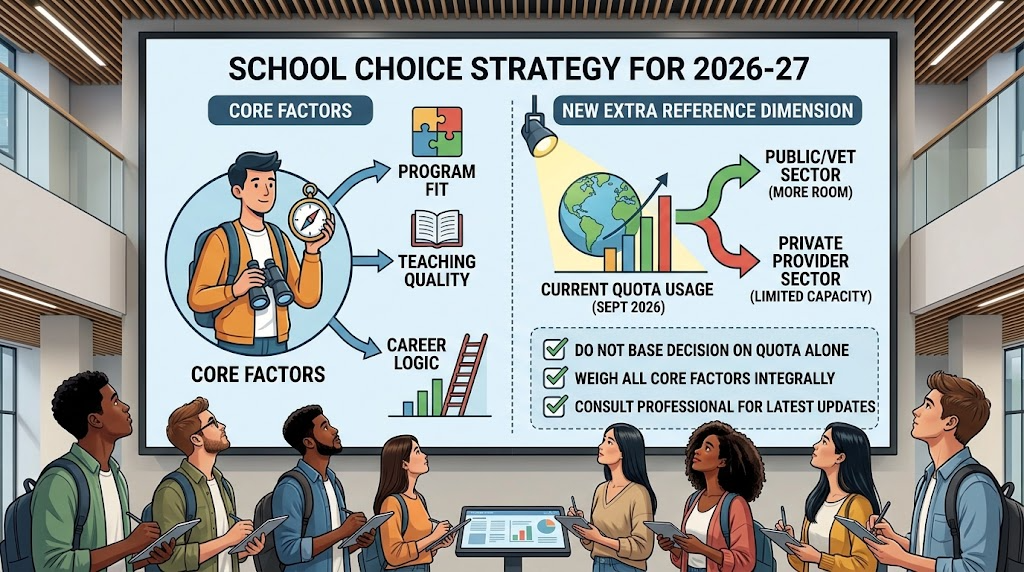
以往择校主要看排名、专业和费用,现在可以额外把”该类型院校目前的配额使用情况”作为一个参考维度,尤其是在你本身在学校类型上还没有强烈偏好的情况下,这个信息可能帮你做出更从容的选择。 School selection has traditionally focused on rankings, programs, and cost — it’s now worth adding “the current quota usage for that institution type” as an extra reference point, particularly if you don’t already have a strong preference between institution types. This information may help you make a more considered choice.
四、我们的建议Our recommendations
✅ 不要仅凭配额数据做决定 ✅ Don’t base your decision on quota data alone
配额使用情况是一个宏观参考信息,不应该成为择校的唯一或主要依据,专业匹配度、职业规划逻辑、学校本身的教学质量,依然是更核心的考量因素。 Quota usage is a piece of macro-level reference information — it shouldn’t be the sole or primary basis for choosing a school. Program fit, career logic, and the institution’s actual teaching quality remain the more central considerations.
配额分布不均衡的现状,未来有可能引发进一步的政策调整(比如对私立机构收紧监管、或对公立/VET适当放宽),建议在正式递交申请前,咨询专业人士确认最新情况。 This uneven quota distribution could prompt further policy adjustments down the track (such as tighter oversight of private providers, or some easing for public/VET institutions) — it’s worth confirming the latest situation with a professional before formally submitting your application.
❓常见问题 FAQ
Q1:私立学校招生超配额,是不是意味着私立学校的签证更难批? Does a private school exceeding its quota mean visa approval there is harder? A:不完全是。配额超出不直接等同于个人签证审批更难,具体结果仍主要取决于你自己的申请材料质量和GS Statement的逻辑自洽程度。 Not entirely. Exceeding the quota doesn’t automatically make individual visa approval harder — the outcome still mainly depends on your own application quality and how coherent your GS Statement is.
Q2:为什么公立大学和VET学院的名额没有招满? Why haven’t public universities and VET colleges filled their quotas? A:这反映了配额限制在不同教育领域的执行力度和实际情况存在差异,具体原因涉及多方面因素,建议关注后续官方数据更新。 This reflects differences in how the quota is being enforced and applied across education sectors — the specific reasons involve multiple factors, and it’s worth watching for further official data updates.
Q3:这个配额分布现状会一直持续吗? Will this quota distribution pattern continue? A:不确定,未来有可能因为这个不均衡现状引发进一步的政策调整,建议申请前咨询专业人士确认最新情况。 It’s uncertain — this imbalance could prompt further policy adjustments in the future. It’s worth confirming the latest situation with a professional before applying.
Q4:择校时应该只看配额使用情况吗? Should I choose a school based solely on quota usage? A:不应该。配额情况只是一个宏观参考维度,专业匹配度、职业规划逻辑、教学质量依然是更核心的择校因素。 No. Quota usage is only a macro-level reference point — program fit, career logic, and teaching quality remain the more central factors in choosing a school.
如果你正在规划2026-27年度的留学申请,想了解不同类型院校目前的配额使用情况对你的具体影响,欢迎联系HWC Legal做详细评估。 If you’re planning your 2026-27 study application and want to understand how current quota usage across institution types affects your specific situation, contact HWC Legal for a detailed assessment.
参考资料:前移民部副秘书长Abul Rizvi公开评论;SBS中文公开报道,2026年 Reference: public comments by former Deputy Secretary of the Department of Immigration Abul Rizvi; SBS Chinese published reporting, 2026