
【本文摘要】
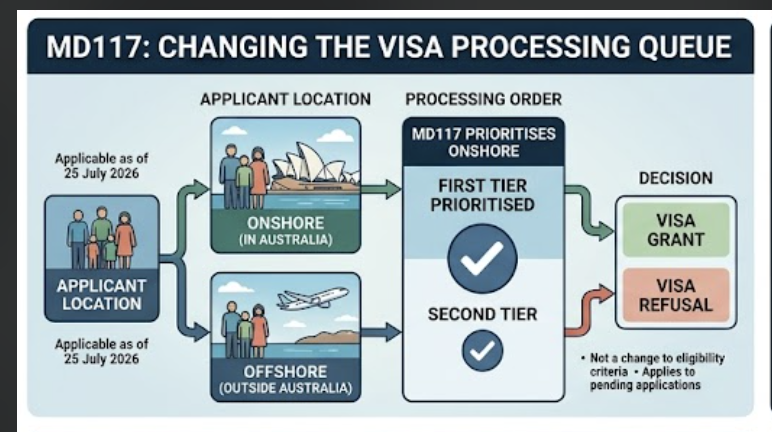
2026年7月25日起,澳洲移民局启用新的部长指令MD117(Ministerial Direction 117),改变了家庭类签证(包括配偶、子女、父母类)的审理顺序,核心变化是:境内可获批的申请优先于境外申请,不论签证子类。这条新规不仅适用于新递交的申请,也适用于已经在排队中、尚未审理完的申请,意味着不少已经在排队的父母移民申请人,实际等待时间可能被进一步拉长。本文详解MD117的具体内容,以及目前业内讨论的几种应对思路。
作者:Chunqiu Hu | 注册移民代理 | HWC Legal Melbourne
最后更新:2026年7月
这不是资格标准的改变,而是”谁先被审理”的顺序改变,但对父母移民申请人而言,实际影响可能非常直接
Subtitle: This isn’t a change to eligibility — it’s a change to who gets processed first, but the practical impact on parent visa applicants could be significant
📌核心提醒:MD117不改变你是否符合父母移民的资格条件,但会改变移民局”先处理谁”的顺序,境内可获批的申请现在排在境外申请前面。
Core point: MD117 doesn’t change whether you’re eligible for a parent visa — it changes who the Department processes first, and onshore-grantable applications now come ahead of offshore ones.
一、MD117是什么What MD117 actually is
📖 法律性质
📖 What kind of instrument this is
部长指令(Ministerial Direction)是移民部长依据《1958年移民法》授权,向移民局审批官发出的操作指引,用来规定各类签证申请应该按什么顺序被审理,不涉及签证资格本身。
A Ministerial Direction is an instruction issued by the Minister for Immigration, under powers granted by the Migration Act 1958, telling Departmental decision-makers what order to work through applications in — it does not touch visa eligibility criteria themselves.
📅 生效时间
📅 When it took effect
MD117于2026年7月24日签署,2026年7月25日正式生效,取代了此前的MD102。
MD117 was signed on 24 July 2026 and commenced the following day, 25 July 2026, replacing the previous Direction 102.
🗂️ 适用范围
🗂️ What it applies to
MD117适用于家庭类签证,包括配偶、未婚夫妻、子女、父母(含供款类和非供款类)、以及其他亲属类签证。
MD117 applies to Family visa applications, including partner, prospective spouse, child, parent (both contributory and non-contributory), and other relative categories.
二、新的审理顺序具体是什么What the new processing order actually looks like
🥇 第一层级:境内优先于境外
🥇 First tier: onshore before offshore
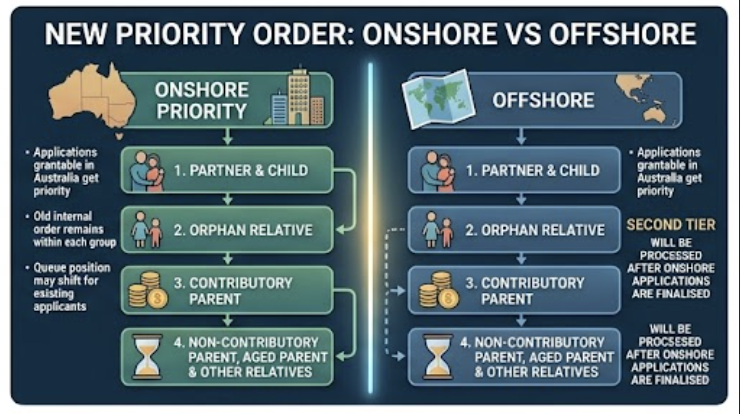
最核心的变化是新增了一个”两级”划分:只要申请人在澳洲境内、且签证可以在境内获批,这类申请会被优先于境外申请人处理,不论具体是哪个签证子类。
The central change is a new two-level split: as long as the applicant is in Australia and the visa can be granted while they remain onshore, that application is prioritised ahead of offshore applications — regardless of the specific visa subclass.
🥈 第二层级:在各自类别内部,原有顺序基本不变
🥈 Second tier: the existing order still applies within each group
在”境内组”和”境外组”各自内部,仍然按照原有的优先级排序:配偶和子女类签证最优先,其次是孤儿亲属类,然后是供款类父母签证,非供款类父母签证、年长父母签证、其他亲属类签证排在最后。
Within each of the “onshore” and “offshore” groups, the existing order still applies: partner and child visas remain highest priority, followed by orphan relative visas, then Contributory Parent visas, with Non-Contributory Parent, Aged Parent, and other relative categories ranked lowest.
⚠️ 对已经在排队的申请也有影响
⚠️ It also affects applications already in the queue
这一点很多申请人容易忽略:MD117不仅适用于2026年7月25日之后新递交的申请,也适用于此前已经递交、尚未审结的申请。这意味着,如果你已经排队多年,你在队伍中的实际位置,可能会因为这次重新排序而发生变化。
This is a point many applicants overlook: MD117 doesn’t only apply to applications lodged after 25 July 2026 — it also applies to applications lodged earlier that remain undecided. This means that even if you’ve already been waiting for years, your actual position in the queue may shift due to this reordering.
🕊️ 例外情况:人道主义特殊情况
🕊️ Exception: compassionate circumstances
审批官仍然可以在具有”充分同情性质的特殊情况和令人信服的理由”、并有相应证据支持的前提下,将某个申请提前处理,但这不是常规操作,需要个案评估。
A decision-maker may still bring an application forward where there are “special circumstances of a compassionate nature and compelling reasons”, supported by evidence — but this isn’t a routine option and requires individual assessment.
三、这对父母移民申请人意味着什么What this actually means for parent visa applicants
⏳ 排队时间可能进一步拉长
⏳ Waiting times may stretch further
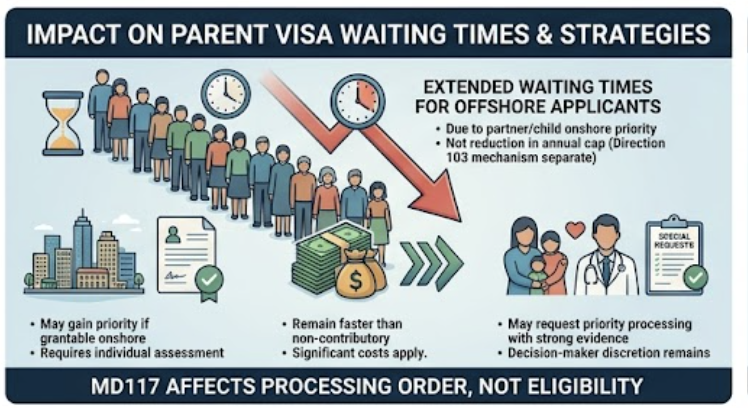
由于配偶、子女类境内申请现在被排到了整个队伍的最前面,而绝大多数父母移民申请人(尤其是境外递交的非供款类父母签证)本身就排在优先级较低的位置,这次调整实际上可能让父母类申请的等待时间比原本预期的更长。
Because onshore partner and child applications now sit at the very front of the entire queue, and most parent visa applicants — especially offshore Non-Contributory Parent applicants — were already lower in priority to begin with, this change may push actual parent visa wait times beyond what was previously expected.
💰 年度配额限制依然存在,是另一套独立机制
💰 The annual cap is a separate, unrelated mechanism
需要注意的是,父母类签证每年的配额上限,是由另一套独立的”配额与排队”机制(MD103)管控的,MD117改变的是队伍内部的处理顺序,并不会改变每年实际发放的父母签证数量上限,两者是相互独立又同时起作用的规则。
It’s worth noting that the annual cap on parent visa grants is governed by a separate “capping and queueing” mechanism (Direction 103). MD117 changes the order within the queue — it does not change the annual cap on how many parent visas are actually granted. The two operate independently but simultaneously.
四、目前业内在讨论的应对思路Response strategies currently being discussed in the industry
🏠 境内递交可能获得优先
🏠 Onshore lodgement may gain priority
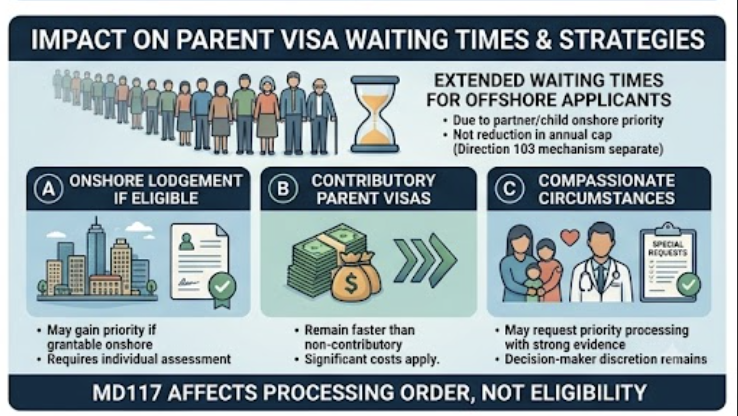
如果父母本身已经合法在澳洲境内(比如持有效的访客签证或过桥签证),且申请的父母签证可以在境内获批,理论上这类申请可能被归入”境内优先组”,处理顺序会比境外递交更靠前——但具体是否适用,取决于申请人当时的身份状态和签证类型,需要个案判断,不是所有情况都适用。
If a parent is already lawfully in Australia (for example, on a valid visitor visa or bridging visa), and the parent visa applied for can be granted while they remain onshore, that application could in principle fall into the “onshore priority” group, processed ahead of offshore lodgements. Whether this actually applies depends on the applicant’s status and visa type at the time — it requires individual assessment, not a universal solution.
💵 供款类父母签证的优先级依然更高
💵 Contributory Parent visas retain a higher priority tier
不论境内境外,供款类父母签证在”父母类”内部的优先级始终高于非供款类,如果预算允许,这仍然是相对更快的路径,但供款类费用明显更高,需要结合家庭实际经济状况权衡。
Regardless of onshore or offshore, Contributory Parent visas retain a higher priority than Non-Contributory ones within the parent category. If budget allows, this remains the relatively faster path — though the fees are significantly higher, and this needs to be weighed against the family’s actual financial situation.
🕊️ 人道主义情况可以尝试申请优先处理
🕊️ Compassionate circumstances can be raised for priority consideration
如果父母存在严重健康问题等充分同情性质的情况,可以考虑提交相应证据申请优先处理,但审批官有较大自由裁量权,不是提交了就一定会被批准。
If a parent has a serious health condition or other genuinely compassionate circumstances, supporting evidence can be submitted to request priority processing — though decision-makers retain significant discretion, and submission doesn’t guarantee approval.
📌 不要因为新规改变原有的资格规划
📌 Don’t let this change your eligibility planning
再次强调,MD117不改变任何签证的资格标准,只改变处理顺序。如果你原本符合父母移民的资格条件,这一点并没有变化,需要调整的是对等待时间的预期,而不是资格本身的判断。
Again, MD117 doesn’t change any visa’s eligibility criteria — only the processing order. If you were already eligible for a parent visa, that hasn’t changed; what needs adjusting is your expectation around waiting time, not your eligibility assessment.
❓常见问题 FAQ
Q1:MD117是不是意味着父母移民更难申请了?
Does MD117 mean parent visas are now harder to apply for?
A:不是。MD117不改变任何签证的资格标准,只改变移民局处理申请的先后顺序,境内可获批的申请现在排在境外申请之前。
No. MD117 doesn’t change any visa’s eligibility criteria — it only changes the order in which the Department processes applications, with onshore-grantable applications now ahead of offshore ones.
Q2:我已经递交父母签证好几年了,会受这次新规影响吗?
I’ve already had a parent visa application pending for years — does this affect me?
A:会。MD117不仅适用于新递交的申请,也适用于此前递交、尚未审结的申请,你在队伍中的实际位置可能因此发生变化。
Yes. MD117 applies not only to new applications but also to those lodged earlier that remain undecided — your actual position in the queue may shift as a result.
Q3:供款类和非供款类父母签证,哪个受影响更大?
Which is more affected — Contributory or Non-Contributory Parent visas?
A:非供款类(境外递交居多)本身优先级就较低,叠加这次”境内优先”的新规则,受到的实际影响相对更明显。
Non-Contributory Parent visas (typically lodged offshore) already had lower priority — combined with the new “onshore first” rule, the practical impact tends to be more noticeable.
Q4:父母移民每年的配额会因为MD117减少吗?
Will the annual parent visa cap be reduced because of MD117?
A:不会。年度配额由另一套独立机制(MD103)管控,MD117改变的是队伍内部处理顺序,不影响每年实际发放数量的上限。
No. The annual cap is governed by a separate mechanism (Direction 103). MD117 changes the order within the queue — it doesn’t affect the annual cap on the number of visas granted.
Q5:如果父母目前身体状况不好,可以申请优先处理吗?
If a parent’s health is currently poor, can priority processing be requested?
A:可以尝试提交相应证据申请,但审批官有较大自由裁量权,不是提交了就一定获批,建议咨询专业人士评估证据是否充分。
It can be requested with supporting evidence, but decision-makers retain significant discretion — submission doesn’t guarantee approval. We’d recommend consulting a professional to assess whether your evidence is sufficient.
如果你正在申请或计划申请父母移民,想了解MD117对你具体情况的实际影响,欢迎联系HWC Legal做详细评估。
If you’re applying or planning to apply for a parent visa and want to understand how MD117 specifically affects your situation, contact HWC Legal for a detailed assessment.
📞 0402 672 808
📧 info@hwclegal.com
💬 WeChat: service_au1
🌐 hwclegal.com
参考资料:Department of Home Affairs公开政策指引;Ministerial Direction No. 117 (2026年7月25日生效)
Reference: Department of Home Affairs published policy guidance; Ministerial Direction No. 117 (effective 25 July 2026)
